Rattan Room Style

Ravish Kumar
| 05-11-2026
 · Lifestyle Team
Rattan has a way of making a room feel more relaxed without sacrificing style. Its woven texture, warm natural tones, and lightweight appearance bring character to interiors that might otherwise feel plain or overly polished.
From a statement chair in the living room to a woven pendant light above the dining table, this versatile material can complement many decorating styles.
Why Rattan Works in Different Interiors
One of rattan's biggest strengths is its flexibility. The material can suit coastal-inspired homes, bohemian spaces, vintage interiors, and modern rooms with clean lines. Its woven construction introduces visual detail without relying on bold patterns or bright colors.
Rattan also helps soften harder finishes. A woven chair beside a metal cabinet, for example, can make an industrial-style room feel less stark. In a contemporary space filled with smooth surfaces, a rattan side table or decorative basket adds a welcome contrast.
Choose a Statement Piece First
For anyone new to decorating with rattan, a single statement piece is a practical starting point. An accent chair, a coffee table, or a distinctive floor lamp can introduce the material without overwhelming the room. A rattan chair works particularly well in an entryway, reading corner, or living room. Add a comfortable cushion and a small side table to make the arrangement functional as well as attractive. In a bedroom, a woven bench or bedside table can create a subtle focal point.
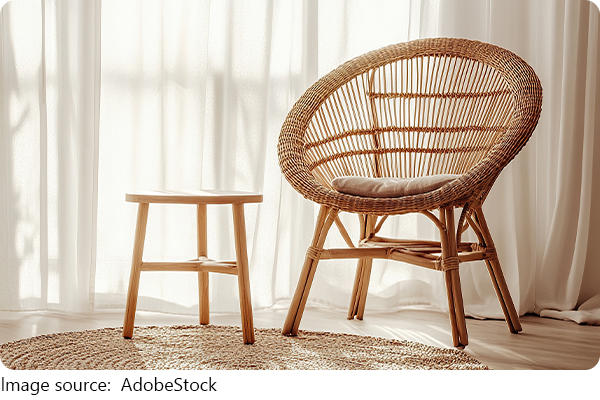
Consider the size and shape of each item before purchasing it. Furniture with open weaving often appears visually lighter than solid pieces, making it useful in compact rooms. However, the overall dimensions still matter, especially when walkways and doorways are narrow.
Combine Rattan With Other Materials
Rattan looks most interesting when it shares space with contrasting textures. Combining several woven items with similar finishes can make a room feel overly coordinated, while introducing different materials creates more depth.
Wood is a natural companion because its grain complements rattan's organic appearance. Metal adds a sharper, more contemporary element, while glass creates a lighter visual effect. Upholstered furniture and soft textiles provide another layer of contrast.
For example, a woven accent chair can sit beside a dark metal table, with a soft cushion adding comfort. In a dining room, rattan chairs paired with a simple wooden table can create an inviting setting without requiring elaborate decorations. Pay attention to the balance between smooth and textured surfaces. The goal is to let each material contribute something different while keeping the overall arrangement cohesive.
Use Color to Create a Balanced Look
Natural rattan commonly features warm beige, honey, and golden-brown tones. Those shades work well with neutral colors such as cream, ivory, and warm gray, creating a calm backdrop that allows the woven details to stand out. For a little more contrast, consider deep blue, forest green, or muted terracotta in cushions, rugs, artwork, or other accessories. These colors can give rattan furniture greater definition without making the room feel visually busy.
Add Rattan to Different Rooms
Rattan is not limited to living room furniture. Smaller accessories offer plenty of opportunities to use the material throughout the home. In the bedroom, woven lampshades, baskets, and occasional tables can add texture without taking up much space. In the dining area, woven placemats and decorative trays introduce a natural detail to everyday settings.

For a hallway, a rattan mirror or compact bench can make an otherwise overlooked corner feel considered. Pendant lights with woven shades can also create an interesting focal point in a dining room or kitchen, provided the fixture is suitable for the location and installed according to its requirements.
Keep the Room Comfortable and Uncluttered
A successful rattan arrangement depends on restraint as much as decoration. Filling every available corner with woven furniture and accessories can make the room feel repetitive rather than thoughtfully styled. Leave enough open space around statement pieces so their shapes and textures remain noticeable. Use baskets for practical storage, keep tabletops relatively clear, and choose accessories that serve a purpose or add meaningful visual interest.
Start with one piece that suits the room, build contrast through complementary materials, and keep the color palette balanced. With thoughtful placement and suitable care, rattan can become a lasting part of the interior rather than a short-lived decorative choice.